

Leek
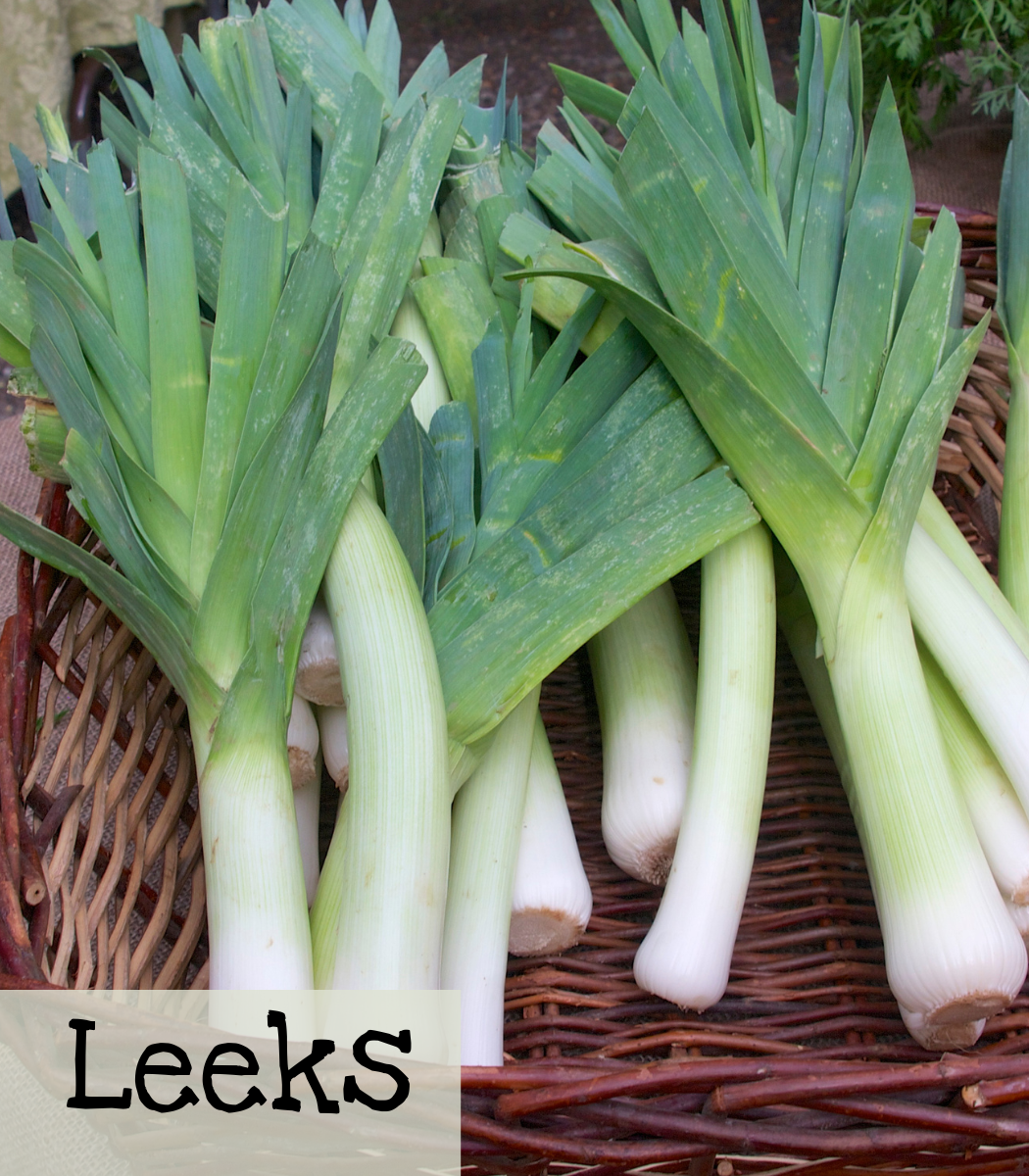
Being a member of the onion family, leeks tend to have a mild onion flavor. Instead of forming bulbs, they form a long, thick stem that, when blanched, is white. They are good fresh or cooked in soups and stews.
|
American Flag |
|
Allium ampeloprasum |
|
Easy to Intermediate |
|
Intermediate |
|
3 years, but germination will drop to around 50% |
|
Biennial |
|
7-14 days |
|
60-65 F |
|
1/2 inch |
|
Stems grow to 15-18” long |
|
Full sun |
|
120-155 days |
|
August |
|
Yes |
Growing Tips


When to Start
Spring: Not recommended for the South. For zones 6 or cooler, start 10-12 weeks before the last frost
Fall: Recommended for the South. For zones 7 or warmer, start 10-12 weeks before the last frost. (Aug 15-Sep 1 for Jefferson, GA.)
How to Grow
Your grow zone will determine if you plant leeks in the spring or fall. Zones 6 or cooler typically planted in the spring and harvested the same season. While there are some winter leeks, often the ground becomes frozen in these zones, making harvesting during the winter difficult. In these zones, you will start indoors or direct sow 10-12 weeks before the last spring frost.
Zones 7 or warmer should plant leeks in the fall. The summers get too hot for leeks to do well. The winter varieties of leeks (ones that take 100 days or more and are very cold-hardy) are preferable in these zones. Start indoors 10-12 weeks before the first fall frost. Harvest will be in late winter and the following spring.
For Georgia, UGA states to direct sow or transplant seedlings from Aug 15-Sep 1.
To start indoors, prepare seed cells or pots by filling them with pre-moistened seed starting mix. Sow seeds to a depth of 1/4-1/2 inch. Then place the cells or pots under grow lights.
Leeks prefer soil temperatures to be around 60-65 F for germination. If the grow lights put out a lot of heat, create more space between the cells and the lights until after germination.
When direct sowing, prepare a trench 6-8 inches deep. The trench is for blanching the leeks as they grow. Sow the seeds in the bottom of the trench to a depth of 1/4-1/2 inch.
Thin or space plants 6 inches apart.
Care
Prepare a full sun bed by loosening the soil to a depth of at least 8 inches. (Deeper is better.)
Leeks are heavy feeders. Getting a soil test would be beneficial to know exactly what nutrients you need to add to the bed. You can also mix in well-rotted manure and finished compost to boost the soil’s richness.
Using green manure is also an option, but this requires additional planning. Step-by-step instructions on how to make green manure are below.
Transplant seedlings after hardening off and when they are 6-12 inches tall. To get white stems, you will need to blanch the leeks. Sunlight is what causes plants to produce chlorophyll. Blanching blocks the sunlight, resulting in the white color.
To blanch, dig a trench 6-8 inches deep. Once the seedlings are 6-12 inches tall, transplant them into the bottom of the trench. Water in. Wait until the leeks are at least the thickness of a pencil to start blanching. If the stocks are any smaller, the leeks may start to rot. Slowly fill in the trench with soil as they grow, leaving just a few inches of leaves showing until the trench is filled.
As leeks are relatively slow-growing, you can interplant faster-maturing crops like lettuce and radish. However, when using the trench, you may need to wait until the trench is filled in to do this.
As leeks are a long-season crop, weeds are a problem. Mulch will help keep weeds under control and retain moisture in the soil. Mulch is also very important in the fall and winter months. Laying a thick covering of mulch, pine, hay, or wheat straw will help keep the ground from freezing and make harvesting easier.
When left to grow in the spring, leeks will go to seed. You can let them do this to start a self-perpetuating leek bed, or harvest the seed for future plantings (see details below). Leeks left to flower sometimes produce little bulbets at the base of the plant, which can be separated and used for propagation.
Making Green Manure
Green manure is made from fast-growing legumes or other crops that are grown specifically for improving soil health rather than harvesting. They are grown, chopped into little pieces, and then tilled into the garden bed. Legumes are typically chosen as they will fix nitrogen in the soil. However, you can use collards, spinach, rye, and mustards.
Any crop, when plowed into the soil, will add additional nitrogen and other beneficial nutrients to the soil after it has fully decomposed.
1. Choose the crop.
2. Plan when you need to start it. Look for how many days are needed for maturity, and then add 4-6 weeks to that. That will give you the number of days you need to sow the green manure before you plant the leeks.
3. Before the crop flowers, mow or cut it into small pieces. This is done 4-6 weeks before planting the leeks. The size it is cut into matters; less than 4 inches is good, but the size of mowed grass is better. The smaller the pieces, the faster it will decompose. And it is critical that it is fully decomposed before you plant the leeks.
Unfinished compost can burn plants. Plus, the microorganisms that break down plant matter use nitrogen for the decomposition process. While decomposition is taking place, you are actually robbing the leeks of nitrogen. You want enough time to lapse between plowing in the green manure and planting the seedlings for the decomposition to finish. Only after this process is finished will the nitrogen in the soil be available for the leeks.
4. For soil improvement, immediately after mowing, till the crop into the ground. The idea is to get as much nitrogen into the soil as possible. If you wait, the plant browns, losing nitrogen. When the plant is still green, it has the most nitrogen; hence the term Green Manure. This step is performed 4-6 weeks before planting the leaks so that it has time to fully decompose. Only after decomposition has finished is the nitrogen available for the leeks to take up.
Harvest
Leeks are cold-hardy and can survive temperatures down to 5°F. You can leave them in the ground until you are ready to use them for a continuous harvest. When planted in the fall, you will harvest in late spring. When planted in the spring, you will harvest in the fall.
Start harvesting once the leeks have reached 1 to 1.5 inches in diameter. But keep an eye on the weather. Like onions, they will rot if there is excess rainfall.
Leeks can be difficult to clean due to their interlacing leaves. Wash thoroughly and check all the crevices in the leaves for soil.
Freezing them tends to make them mushy. They are best used fresh. They store for around 2 weeks in the refrigerator, which is why leaving them in the ground until you are ready to use them is a good option.
When storing them in the refrigerator, don’t wash or trim. Except for tiddying up the roots. Just leave at least 1 inch of roots. Their odor can transfer to other items in the fridge. Wrapping them in plastic helps prevent affecting other items.
Pest Management
Like other members of the onion family, thrips can be a problem. Check regularly for insect problems. In Georgia, planting them for a fall or winter harvest helps, as thrips are dormant in the winter months.
Making use of Integrated Pest Management will greatly help with pest control during the rest of the year. Companion planting and making use of trap cropping are two pest management techniques you can use.
How to use
They are good raw or cooked. They are done when fork-tender, as they like to get tough when overcooked. You can use them in soups, stews, and as an onion substitute. They make a pretty topping for pizzas, too!
Pro Tip!
Incompatibles: Beans, peas, asparagus, and other plants in the onion family, such as garlic.
Grows well with: Carrots, leaf lettuce, spinach, radish, peppers, tomatoes, parsley, zinnias, marigolds, and nasturtiums
Seed Saving

Isolation Distance
Leeks will cross with other leeks, but will not cross with other members of the allium (onion) family. Separate by 1 mile from other leeks for seed purity.
Instructions
Leeks are biennial and should flower in the second year. In areas that experience mild winters allow them to overwinter, protecting them from freezes and allow them to go to seed in the spring. Areas that experience cold winters will need to dig them up and store them in a cool place, like a root cellar. Then replant them in the spring to allow them to flower and go to seed.
If needed, you can hand-pollinate flowers. You may need to do this if you are not able to isolate by a mile different varieties or if insects aren’t visiting the flowers.
To hand-pollinate, remove mesh bag covers (if isolating) and use a fine, light paintbrush to mimic the action of visiting insects, thoroughly mixing pollen between several flowers. If isolating, make sure to hand-pollinate the flowers during a time (such as early morning or late evening) when insects are not present, and replace covers quickly and securely.
Allow seeds to ripen and dry on the plants, then harvest quickly to avoid losing seeds. Placing a mesh party favor bag over the bloom and securing it will collect any seeds that fall before you can harvest.
Features
- Rabbit resistant
- American Flag: A Scottish heirloom known for its large size and mild, sweet onion flavor. Very winter hardy. Considered a late-season leek and good for overwintering.

Know your grow zone to know if you should plant leeks in the spring or fall.
Mulch heavily in the winter to keep the ground from freezing longer. This makes for easier harvests.
To get a white stem, you will need to blanch.
You May Also Like: