

Canterbury Bells
Canterbury Bells are a biennial, blooming in the second year. They are showy flowers that are good for cottage gardens, borders, and fresh bouquets.
|
Purple and White Mix |
|
Campanula medium |
|
Easy to Intermediate |
|
Easy |
|
3 years |
|
Biennial |
|
14-21 days |
|
None |
|
Surface Sow |
|
3′ in the second year |
|
Full Sun Seeds need light to germinate |
|
Second Year |
|
March, April, May, August |
|
Yes |
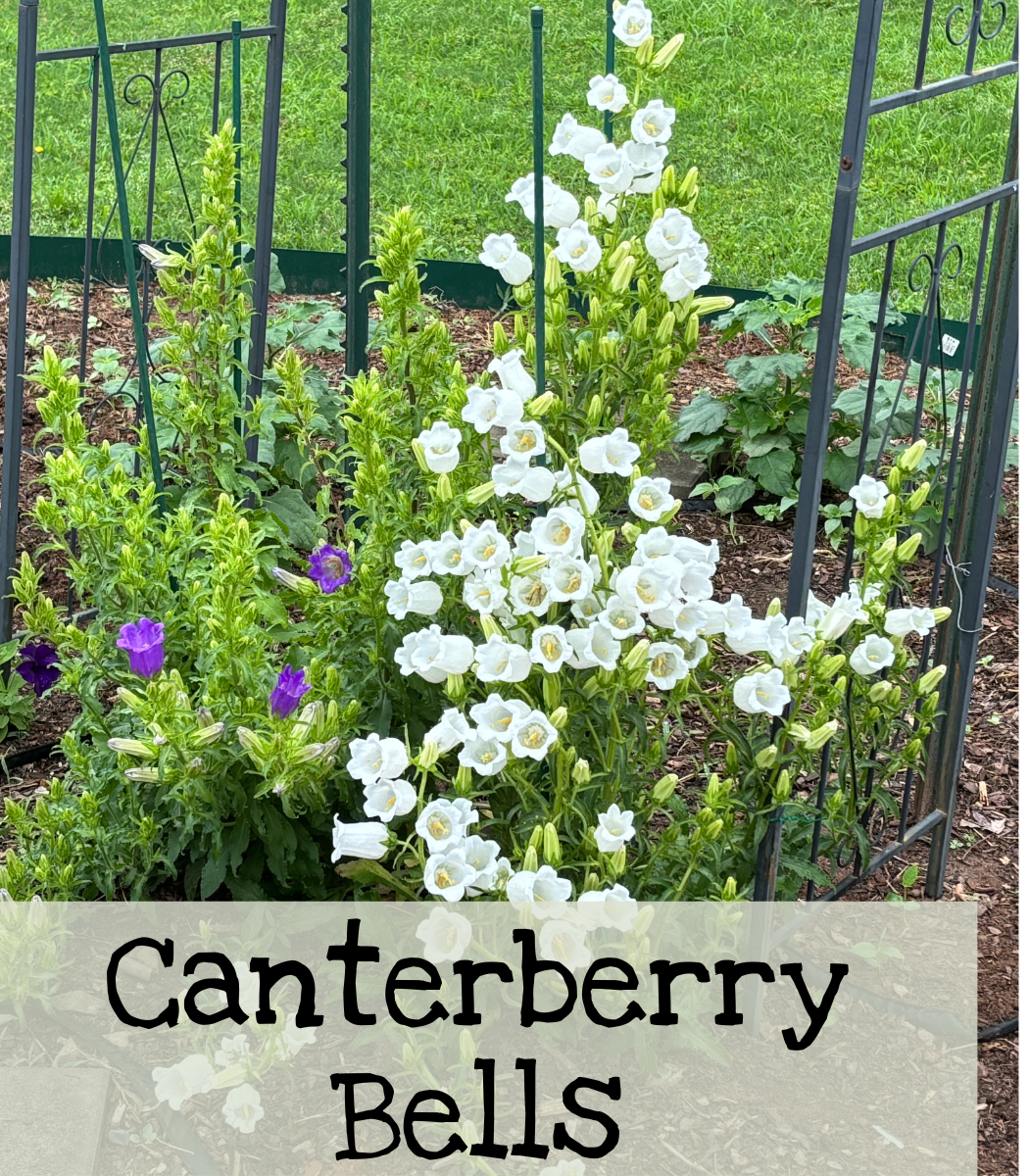
Table of Contents
Growing Tips


When to Start
Spring: Start indoors 4-6 weeks before the last average frost. (Mid-March to the beginning of April for Jefferson, GA)
Direct Sow: After all danger of frost has passed. (May 1 for Jefferson, GA)
Fall: Start indoors 10-14 weeks before the first average freeze in the Fall. (Mid-August to Mid-September for Jefferson, GA)
Fall Transplant: 6-8 weeks before the first average freeze in the Fall. (End of September, beginning of October for Jefferson, GA.)
How to Grow
When starting indoors, start the Canterbury seeds 4-6 weeks before the last average frost in your area. Pre-moisten sterile seed starting mix and fill your seed cells or pots. Gently press the seeds into the mix as they need light to germinate. Then place the cells or pots under grow lights.
To direct sow, prepare the garden bed by loosening the soil and removing weeds. Surface sow seeds in the garden bed after all danger of frost has passed.
Keep the seeds moist throughout the germination process, which can take 2-3 weeks. The ideal soil temperature for germination is between 72°F and 75°F.
Thin or space plants to 10” apart.
You can also plant them in the fall. In more northern climates, you could direct sow 10-14 weeks before your first average freeze in the Fall.
For warmer climates, start indoors 10-14 weeks before your first average freeze. Then harden them off for transplanting 6-8 weeks before the first average freeze. This is generally around the same time pansies are transplanted.
This should allow the plants to get established before winter. Mulching them well to protect them from winter temperatures is very important when starting them in the fall.
The benefit of planting in the fall is that you should have blooms the following spring.
Care
This European native likes temperate conditions. It does better in more northern climates that have milder summers. While these bells will tolerate part shade, for the most blooms, plant in full sun beds.
The exception to this is areas that experience hot summers, such as the South. In this case, the plant benefits from a location with afternoon shade.
Space the Canterbury bells 10 inches apart and in beds with well-draining soil. This spacing is important in humid climates, as Canterbury bells can suffer from rust and powdery mildew.
Keep the soil moist, but not soggy. In the first year, the plants will be small green-leaf rosettes. Mulch well in the winter to protect them from freezing temperatures.
They will bloom in the second year for about 3 months. You can extend their bloom time by deadheading. The flower stocks will reach around 3 feet tall and will require some staking to keep them from falling over.
The flowers tend to self-sow. But it is very easy to collect the seeds for re-planting. Once the flowers have turned dry, brown, and crispy, cut the pods off the stalks. You may want to use gloves as they can be a little sharp. Then cut the tops of the dry pods off and pour the seeds into a container.
Pest Management
Canterbury bells are subject to rust and powdery mildew. Observe proper spacing to allow adequate air flow around the plants.
How to use
They are a good cut flower, perfect for fresh flower arrangements. To harvest for flower arrangements, when the first 2 or 3 bells open, cut just above the first side shoots. Then strip off the lower leaves. Using flower food in the vase will help extend bloom time.
My personal experience
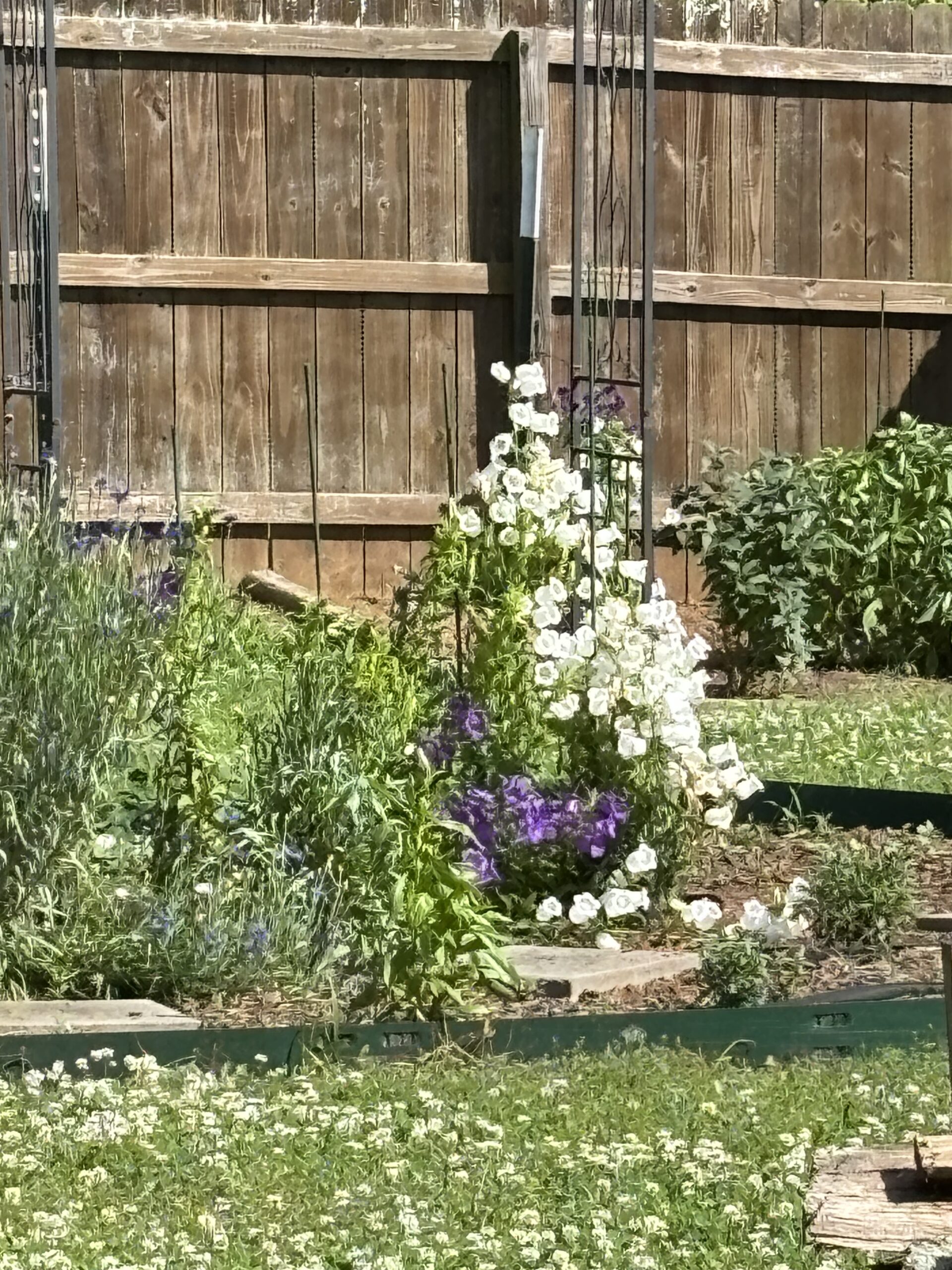
I chose these flowers because they are a beautiful flower and were easy to start from seed. I didn’t realize until later, they weren’t a fan of the South. But I had no problems growing these showy flowers.
I did most everything wrong when growing them in the South. They were in clay soil and full sun. However, they were as happy as they could be.
The one thing I think I did right was transplanting them as soon as the danger of frost had passed. My area usually has a short window for spring temperatures, so planting them as soon as can be, allowed the plants to experience the cooler temps as long as possible.
The first year, they were just short little mounds of green leaves. But the second year. WOW! They shot up and were filled with gordous white and purple blooms for about 3 months.
The blooms are large, and it was so fun to watch bumblebees disappear into the depths. I also really liked how easy it was to save the seeds from these flowers.
They only thing that surprised me was, while the flowers have no spikes or prickles, the dried stocks do. This was no problem I just wore gloves when pouring out the seeds from the pods.
Seed Saving

Isolation Distance
Canterbury bells are insect-pollinated. Isolate different varieties by 1 mile or bag blooms to ensure purity.
Instructions
Seed saving is relatively easy. You will want a pair of gloves, as when the flower heads turn brown, they become prickly.
Allow the blooms to become brown, dry, and crispy. Cut the pods off the dried stocks with scissors. Then cut the tops off the dry pods and pour the seeds into a container. Allow the seeds to fully dry, then store them in a labeled paper seed bag.
Features
- Ornamental
- Good for landscaping, beds, borders, cottage garden, cut flower garden
- Resistant to deer and rabbits
- Attracts pollinators and hummingbirds
- Purple and White Mix: Huge bell-shaped flowers. Heirloom.

Mulch the first-year seedlings well to protect them from winter temperatures.
In the South, you may find it beneficial to transplant as close to your frost-free date as possible.
Sources:
plants.ces.ncsu.edu
growinginthegarden.com