

Winter Squash
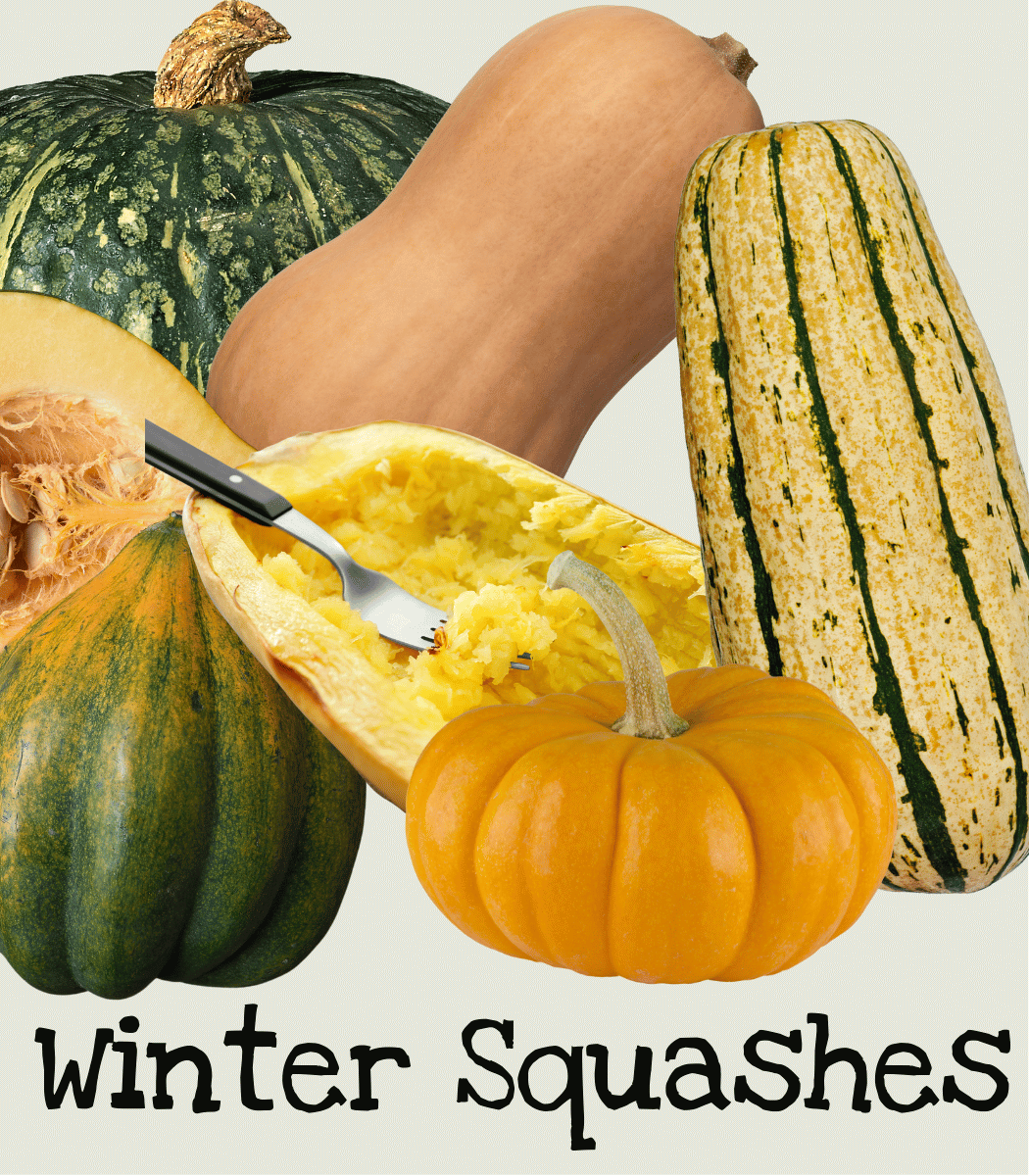
Squash covers a wide range of plants, including summer and winter varieties. Winter squash includes pumpkins, butternut, acorn, delicata, and others. Often these are roasted or puréed and made into soup.
Spaghetti squash is good topped with spaghetti sauce or seasoned simply with salt and pepper. See below for the recipe.
|
Family: Cucurbitaceae Genus: Cucurbita |
| Can be used as a trap crop | |
|
Intermediate to Difficult |
|
Difficult |
|
5 years if properly cured, cleaned, and stored. |
|
Annual |
|
5-12 days |
|
None |
|
1 inch |
|
March, April, and May |
|
Yes |
Growing Tips


When to Start
Spring: After the danger of frost has passed. (April 1-May 15 GA)
Start Indoors when Using as a Trap Cropping: Start soon enough so that the plant is blooming at the time the pests you are trying to contain arrive.
How to Start
Sow the seeds directly into the garden after the danger of frost has ended (May 1 for Jefferson, GA). Summer and winter squash are commonly planted in hills about 1 inch deep. This isn’t necessary, but it can be helpful in pest management. Usually, only 4 to 5 seeds per hill are plenty, thinning down to 2 or 3 plants per hill once the seedlings have developed their true leaves.
Squashes require space. They like to vine and spread. Hills and rows of winter squash should be spaced approximately 5 to 7 feet apart, and the hills should be spaced about 3 feet apart.
Care
Squashes require full sun, fertile soil, and sufficient moisture. They are heavy feeders, meaning they use up lots of nutrients. Use well-composted material and mix it into the soil before planting. Side dress with more well-composted material or use a fertilizer that is designed for squashes as the season progresses. Weeds can be hard to manage with a vining plant. Use cardboard, mulch, or landscape fabric to reduce weeds.
Interplanting Tip
To help fix nitrogen in the soil while the squash is growing, experiment with using interplanting. Pole and bush beans, lima beans, black-eyed peas, or even the flower–butterfly pea– are excellent to try. These plants will fix nitrogen in the soil. Set up trellises intermixed with the squash to allow one of these other crops to climb up.
Just keep an eye on the squashes, they might try to climb up the trellis too. If they are allowed to do that, it will make harvesting difficult as the squashes might be too heavy for the vines to support.
When to Harvest
- Harvest winter squashes on a dry day when the skins are hard after the plants have died back, and before the first frost. The spaghetti squash should be golden yellow.
- To slow decay, leave an inch or two of stem on the winter squash when harvesting them.
- When ripe, cut the fruit off the vine carefully with a sharp knife or pruners; do not tear. Be sure not to cut too close to the squash; a liberal amount of stem (3 to 4 inches) will increase the squash’s keeping time.
Pest Management Vine Borers and Squash Bugs:
Consider covering the plants with mesh netting and hand pollinating to keep squash vine borers and squash bugs from getting into crops. If this isn’t practical, try using companion plants to attract beneficial predators that eat pests, or trap crops to keep pests out of the squash are good pest management techniques. I experimented with planting radish intermixed with my zucchini. It did seem to help deter squash bugs. I didn’t have nearly the problems I normally do. Links are below.
Using as a Trap Crop
When using the squash as a trap crop, start indoors. Start soon enough that it will be its most attractive to the pests (blooming) at the time the pests arrive. For more information on the methods, management, and techniques of trap cropping, explore “Trap Cropping.” The link is below.
Pro Tip!
Incompatibles: Potatoes
Grows well with: Marigolds, Celery, Corn, Melons, and other squashes.
Seed Saving

Isolation Distance
Separate the same species of Cucurbita by one mile or cage and hand pollinate.
Instructions
Squashes should be fully mature before harvesting. This is well past the eating stage. Harvest when skins are hard and leathery.
Store the unopened fruits for another 20 days before removing the seeds. This is because some squash family seeds gain in size and viability for 20 days after harvesting. After the 20-day waiting period has passed, cut the fruits open and remove the seeds to prepare them for storage.
Squash seeds can be fermented for higher germination and better disease resistance. (Don’t ferment seeds if they appear to have already naturally fermented while waiting in the wet fruit, as evidenced by the smell and appearance of the seeds and pulp).
Scoop the seeds—together with the pulp that surrounds them—into a jar or bowl with a little water (about half as much water as seeds and pulp). Store this seed/pulp mixture in a warm place (75 to 85º F) for 1½ to 5 days. (Yes, it stinks and is gross. Put it somewhere where you won’t pass by it very often.)
Fermentation will be evidenced by bubbling and/or by the formation of a white mold on the surface of the mixture. As soon as the bubbling or mold has been evident for a day or so, remove the seeds that float and pulp. Viable (good) seeds will sink to the bottom. Pour the viable seeds into a colander.
Whether you’ve fermented the seeds or not, rub them underwater between your fingers gently but thoroughly while cleaning them to remove the naturally occurring gel from their coats. Dry the cleaned seeds on a shiny surface (they will stick to paper) until they are brittle.
Features
- Squash can be used as a trap crop
- When cooked, spaghetti squash resembles spaghetti. It’s good with marinara sauce or seasoned simply with salt and pepper.
Acorn:
- Sweetnut, Cucurbita pepo: Heirloom. The flesh is sweet and creamy and the seeds are hulless pepitas! 4-inch fruit. 80 days.
- Early Acorn Hybrid, Cucurbita maxima: The orange-yellow flesh is sweet, nutty, and smooth. Vines produce around five, 5-inch squashes. 75 days.
Buttercup:
- Buttercup, Cucurbita maxima: Heirloom. The turban-shaped fruits have dark-green skin with silvery stripes and spots. The flesh is orange, thick and smooth. It combines sweetness with a buttery flavor and makes the most delicious soups. 4-inch fruit. 105 days.
Butternut:
- Burpee’s Butterbush Butternut, Cucurbita moschata: Heirloom. One of the best-tasting winter squashes. The bushy plants are good producers and are perfect for smaller gardens. Each plant produces 4-5 butternut squashes. Harvest around 12-18 inches. 75 days.
- Honeynut, Cucurbita moschata: Heirloom. A mini butternut squash is called one of the best-tasting squashes of all time! 4-5 inch fruit. 100 days.
- Tahitian Melon, Cucurbita moschata: Heirloom. It is a butternut type. The fruit is very sweet, and the juices will caramelize when roasted or baked. It is good for pies, soups, and desserts. 12-20-pound fruit. 110 days.
- Waltham Butternut: Heirloom. It has good yields and has flavorful, orange-colored flesh. Excellent baked. 6-pound fruit. 85 days.
Winter:
- Boston Marrow, Cucurbita maxima: Heirloom. The fruit is hubbard-shaped and a brilliant red-orange in color. It has rich, orange flesh that won it a place in Slow Food’s “Ark of Taste” for having superior flavor and taste! 15-pound fruit. 105 days.
- Candy Roaster North Georgia, Cucurbita maxima: Heirloom. Delicious, smooth orange flesh is perfect baked, fried, and makes great pies; super sweet and hard to find. 10-pound fruit. 95 days.
- Green Striped Cushaw, Cucurbita argyrosperma: Heirloom. A Native American squash with white, green-striped fruit. The fruit gets large, 10-20 pounds, and has crooked necks with a plump bottom. 95 days.
- Spaghetti, Cucurbita pepo: Heirloom. Once cooked, the squash will shred like spaghetti. A great option for a healthier or vegan version of the dish. 3-4-pound fruit. 100 days.

- Squashes are what are called ‘heavy feeders.” This means they use up lots of nutrients so you have to replenish the nutrients in the soil. Use a water-soluble fertilizer that is designed for squashes. When it is water-soluble, the nutrients are immediately available for the plant to take them up. A fertilizer designed for vegetables is better because it is designed to help the plant produce fruit rather than excessive foliage. Just remember, too much of a good thing is a bad thing. Over-fertilizing the pumpkin will cause harm and make the plant unhealthy. Yellow leaves can be a sign of too much fertilizer. A good rule of thumb is to fertilize every 10 days. Just adjust depending on the nutrients in the soil and the health of the plant.
- Interplanting can also help keep the squash well-fed when using nitrogen fixers. Nitrogen fixers fix nitrogen in the soil. Try experimenting with planting pole green beans, pole lima beans, black-eyed peas, or even the flower, butterfly pea. Set up trellises intermixed with the squash to allow one of these other crops to climb up.
- For pest control, try planting companion flowers, or check out my zucchini pest prevention for more ideas. You can also experiment with plants that MAY repel squash bugs.
- I tried using radish to help deter squash bugs. It really did seem to help. I still had a few eggs I had to cut off the leaves, but I only had to do that 2x during the growing season. It didn’t seem to help with the squash vine borers; they still got some plants.
Sources:
Starting and saving Seeds by Julie Thompson-Adolf
Edenbrothers.com