

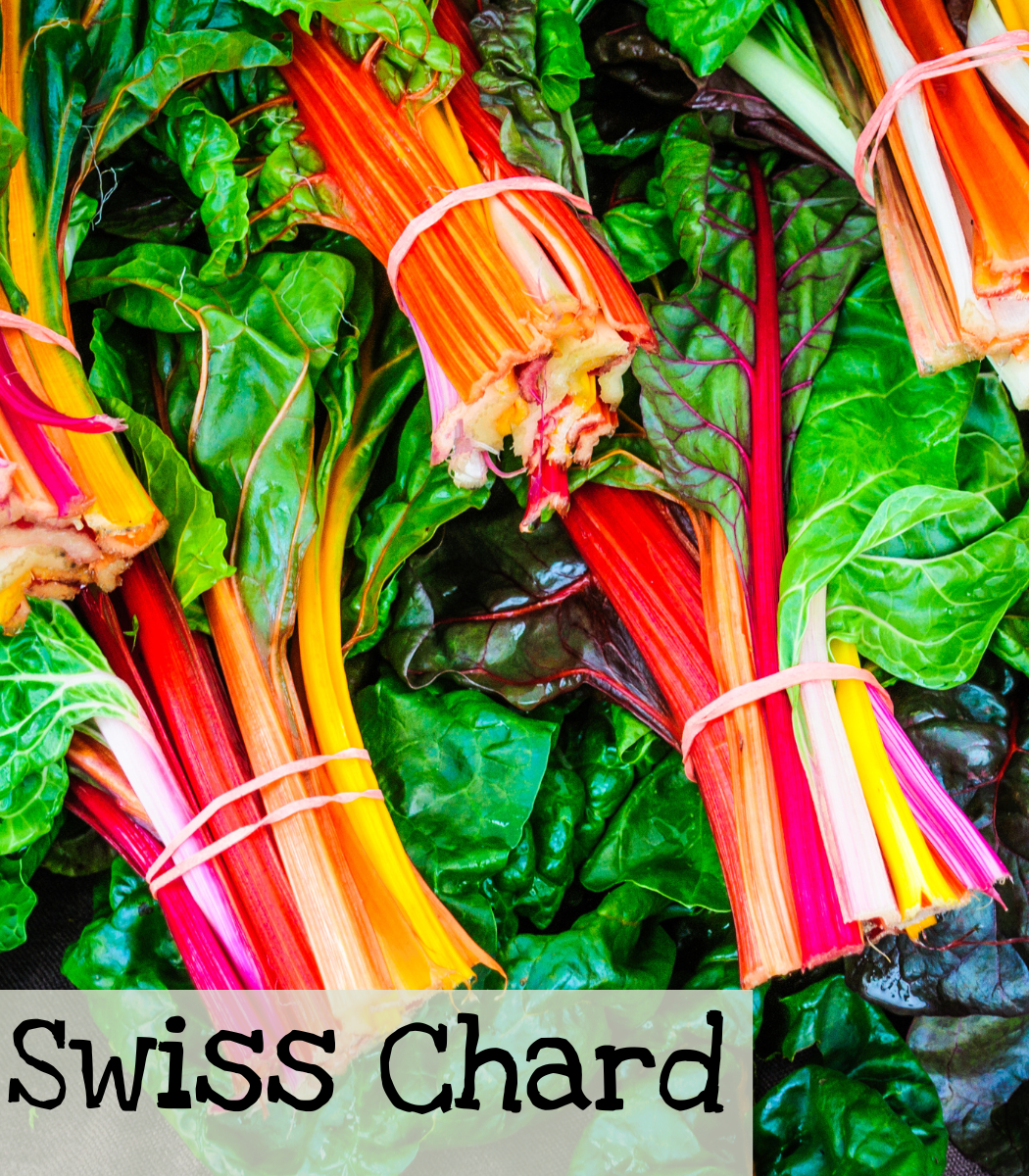
Swiss Chard
A beautiful cool-weather crop, swiss chard stems come in a rainbow of colors. Leaves and stems can be eaten raw and tossed in salads or steamed, sautéed, or cooked in many kinds of dishes.
|
Fordhook Giant |
|
Beta vugaris |
|
Easy |
|
Intermediate |
|
5 years if properly stored |
|
Biennial |
|
7-14 days |
|
Soak overnight |
|
1/2 inch |
|
12”-16” tall x 8” |
|
Full sun |
|
55-60 days |
|
February, March, August |
|
Yes |
Growing Tips


1 plant per 12” container
When to Start
Spring: Start indoors for later transplant 4-6 weeks before the last frost. (Feb 15 – End of March for GA)
Direct sow: 2-3 weeks before the last frost. (End of March for Jefferson, GA)
Transplant: Two to three weeks before the last frost date. (End of March for Jefferson, GA)
Fall: Direct sow 6-7 weeks before the first frost. (Aug 1-Sep 20 for GA)
How to Start
Swiss chard likes full sun and well-draining soil. Soak seeds overnight. Sow seeds 1 to 2 inches apart. Cover the seeds lightly with loose soil, and then gently water them in. Plants should sprout in 7-14 days.
Care
Seedlings are tolerant of frost, but protect them from moderate to severe freezes. For a continuous supply, plant each planting about three weeks apart. Once the plants grow and are a couple of inches tall, thin them to about 6-12 inches apart.
Chard likes rich soil. Side dress with compost or fertilize for good leaf production. Keep the soil moist but not soggy. Use mulch to help retain soil moisture and suppress weeds.
Harvest
When the plants are 9 to 12 inches tall or when the leaves are 6” long, you can start harvesting them. Chard reaches a mature height of 1-2 feet.
Pest Management
Slugs can be the bane of Swiss chard. Try one of the slug traps mentioned in “Slug Traps.” The link is below.
Pro Tip!
Grows well with: Beans, The Cabbage Family, and onion
Seed Saving

Isolation Distance
Swiss chard and beets are wind-pollinated and of the same species. All varieties of beets and Swiss chard will cross each other. Different varieties must be caged, bagged, or separated by 1 mile for safe distance isolation.
Instructions
Let seeds mature and dry on the stalk before harvesting, then completely dry before gently rubbing the seeds off their stalks. Each ‘seed’ is botanically a berry and contains several actual seeds (breaking them apart would damage many of the seeds). This is why chard and beets often come up several plants to a spot despite the most carefully frugal sowing efforts.
Features
- Fordhook: Heirloom. The leaves are dark green and crumpled. They are very tender when cooked. It produces heavy yields in late spring and into summer.

- Harvest young leaves at 6”, mature leaves at around 20”.
- Swiss chard is a member of the beet family.