

Dill
Often used in pickling, dill is a versatile herb that can flavor many kinds of dishes. It is also good for more than its culinary value! Dill makes a good trap crop and companion plant. It is also one of the host plants for the black swallowtail butterfly.
|
Bouquet; Fernleaf; Mammoth |
|
Anethum graveolens |
|
Easy |
|
Intermediate |
|
3 years if properly stored |
|
Annual |
|
10-21 days |
|
None |
|
1/8 – 1/4 inch |
|
|
|
Full sun |
|
40-60 days |
|
April and May |
|
No |
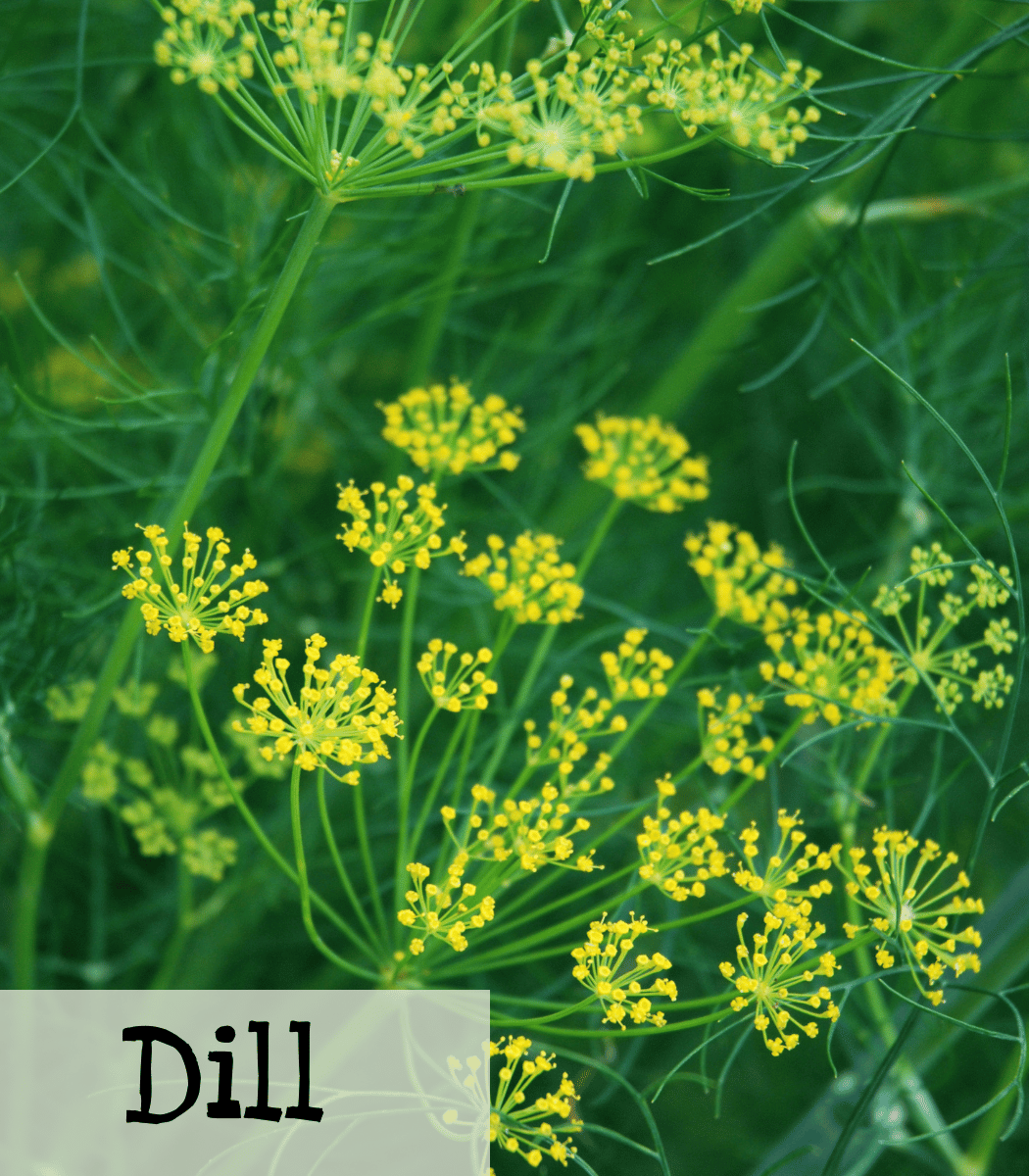
Table of Contents
Growing Tips


12+” deep container
When to Start
Spring: Direct-sow after all danger of frost has passed and when temperatures are above 60F.
How to Start
Direct-sow shallowly in well-draining soil, where it can get full sun after all danger of frost has passed. Thin to 4-8 inches. Dill grows a long taproot. If you are growing in a container, make sure it is at least 12 inches deep. Any shallower and there won’t be enough room for the roots.
Care
Bottom water with a soaker hose or drip irrigation to prevent diseases like downy and powdery mildew. Dill is also susceptible to being blown over in high winds. Plant it in an area that is protected from the wind. Keep the soil moist but not soggy; give around 1 inch of water a week. Use mulch to suppress weeds and retain soil moisture. Examine the plants daily for caterpillars, especially if dill is being used as a trap crop or companion plant. Caterpillars can decimate plants very quickly. Pick off caterpillars by hand.
Harvest
Dill will start to change flavor once it flowers. Harvest leaves before flowers form. Harvest the seeds just like you would for seed saving. See below.
Pest Control
Tomato hornworms are one of the pests that really enjoy dill. If you plant tomatoes and peppers, consider using dill as a trap crop to help control tomato hornworms. Learn more through Trap Cropping. Dill also makes a good companion plant as it attracts beneficial predators like lacewings, hoverflies, and ladybugs that will eat aphids. These are just some of the beneficial predators dill attracts that will help you with pest problems. Learn more through Companion Planting.
Host Plant
The black swallowtail butterfly lays eggs on several host plants. These plants are what the caterpillars feed on until they transform into butterflies. Some of the host plants of the black swallowtail butterfly are Golden Alexander (Zizia aurea), the Parsley family (Dill, Fennel, Carrot, Common Rue), and the tulip tree. When using dill as a host plant, plant a good amount, as the caterpillars will eat a lot.
How to use
Dill leaves add delicious flavor to both potato and cucumber salads. It is good on fried eggs and in Greek cuisine. The seeds are used in pickling.
My personal experience
Dill is a nice ingredient to have on hand for pickling. I also love fresh dill in chicken salads and on eggs. But I struggle with direct sowing it. The soil never stays moist enough for the seeds to germinate. So I found a way to transplant it successfully even though it hates being transplanted.
I use the same technique that I use for transplanting cilantro.
I use a washed TV dinner container that is the same circumference of the pot I’ll be transplanting into later. I cut slits into the bottom for drainage. Then, I line the container with newspaper so that the paper hangs over the sides. This is so I can lift the plant out of the container with minimal root disturbance. When it’s transplanted, the newspaper will decompose, and the roots will be able to punch through.
I fill the lined TV dinner tray with seed starting mix and sow the seeds. Then it is placed under grow lights. After it has outgrown the TV tray, I harden it off.
To transplant, I lift it out of the tray by the newspaper and set it on top of the soil in the pot it will grow in. This creates very little root disturbance. Water it in and let it establish. I’ve had a great deal of success with growing it this way.
Pro Tip!
Incompatibles: Carrot and tomato
Grows well with: All brassicas (kale, broccoli, etc.)
Seed Saving
Dill will cross with Fennel
Isolation Distance
Dill is insect-pollinated, and different varieties may cross. It will also cross with fennel. Separate fennel and different varieties of dill by one mile.
Instructions
Harvest individual heads as they dry on the plants since they ripen over a period of time.
Once pods or husks have been harvested, store them in a dry place and wait until they are thoroughly dry. When the pods or husks are dry enough, they will easily crumble between your hands. Crumble the pods or husks until all the seeds are released.
Seeds and finer chaff are easy to separate by a variety of methods. One way is to use two screens of varying mesh, one a little smaller than the seeds and the other a little larger. The first screen lets anything smaller than the seeds fall through, and the second lets the seeds through and stops anything larger.
Features
- Culinary
- Mammoth dill is good for pickling and flavoring various dishes
- Trap Crop
- Companion plant
- Host Plant
- Container friendly
- Bouquet: Great for pickles, soups, salads, eggs, and vegetables.
- Fernleaf: This dwarf plant is perfect for containers. The slowest bolting dwarf plant.
- Mammoth: Heirloom. Excellent for brightening salads, soups, omelets, and vegetables.

- Dill doesn’t transplant well.
- Dill will cross with Fennel.
- Keep dill away from carrots.
- It grows well next to onions and cabbage.
You May Also Like:
Companion Planting: How to use flowers to help control pests.
Trap cropping: How to keep pests out of your main crop.
How to Preserve the Harvest Safely
Fennel (Host Plant)
Sources:
Amanac.com
Burpee.com
The New York Botanical Garden, Herbal Handbook, Clarkson Potter.