

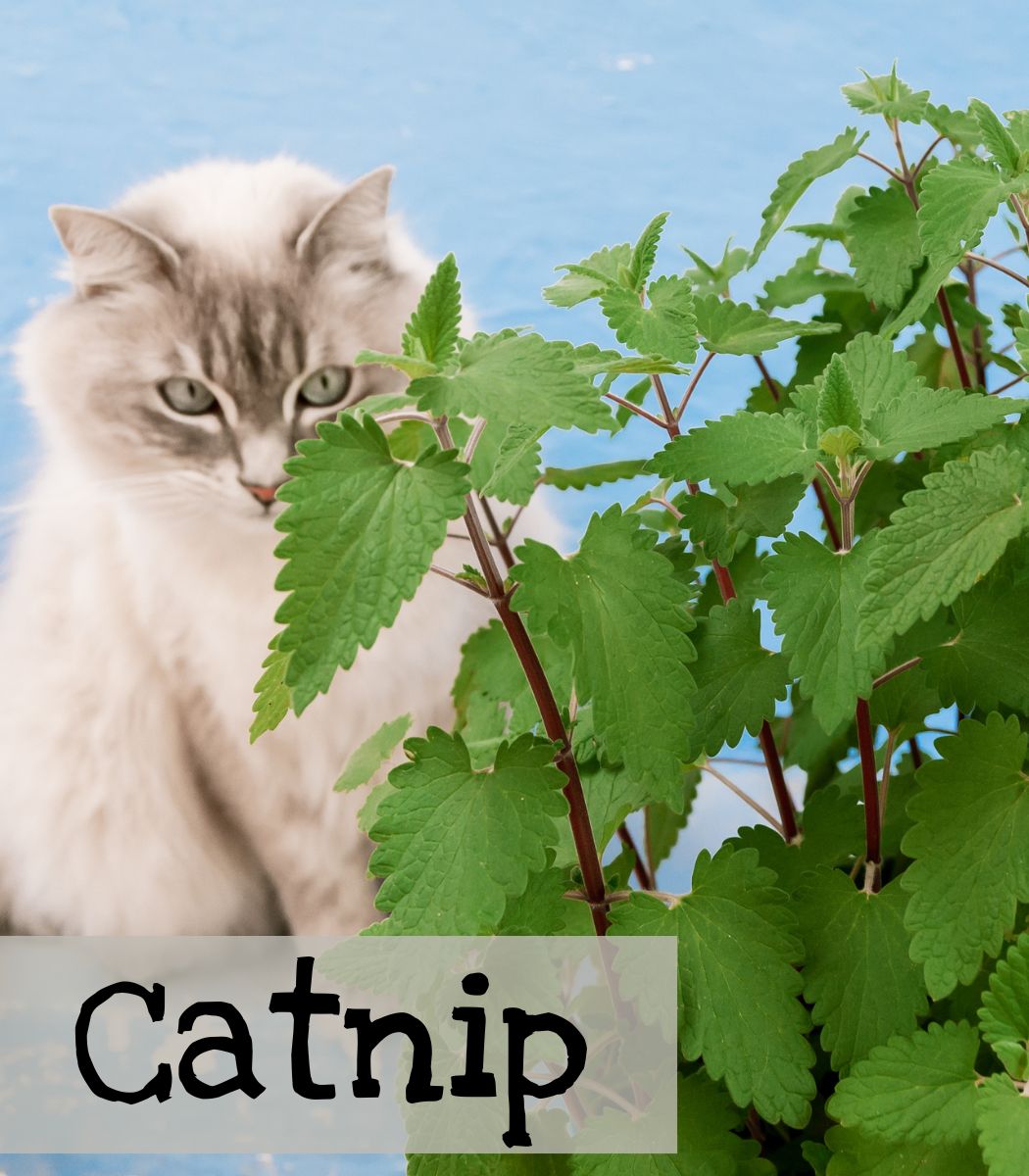
Catnip
Catnip is a perennial member of the mint family. It does attract beneficial wasps. However, it is most famous for how it affects most cats. It contains a chemical that many cats find very attractive. When dried, it can be used to make homemade cat toys. Just be aware if you plant this, your home may become the cat place to be!
|
N/A |
|
Nepeta cataria |
|
Intermediate to Easy |
|
Easy |
|
5 years if properly stored |
|
Perennial |
|
14-21 days |
|
None |
|
Surface Sow |
|
18” |
|
Seeds need light to germinate Full sun |
|
80-90 days |
|
April and May |
|
No |
Growing Tips



3 plants per 12” container
When to Start
Spring: Start indoors, 6-8 weeks before your last average frost. (Mid-Feb – Mid-Mar for Jefferson, GA)
Direct sow: After the danger of frost has passed. (May 1 for Jefferson, GA)
How to Start
Catnip is only intermediate because the seeds need to be properly prepared before planting. The seeds are tough and need to be cold-stratified before they will sprout. This can be done by first placing the seeds in the freezer overnight and then placing the seeds in a bowl of water for 24 hours. This process will damage the seed coat and will make it much easier for the catnip seeds to sprout.
After you have stratified the seeds, catnip is easy to grow. Start indoors 6-8 weeks before the last frost in your area. Surface-sow into cells filled with pre-moistened seed starting mix, as the seeds need light to germinate. Then place them under grow lights. Pot up as needed. Transplant after the danger of frost has passed.
To direct-sow, prepare the seeds with cold stratification. Then, after the danger of frost has passed, surface-sow in a full sun bed with well-draining soil. Thin to 18-20 inches between plants.
Care
Catnip can be aggressive in some areas, so you need to take steps to control it. Catnip plants spread readily by seed. To control their spread, you’ll need to remove the flowers before they go to seed.
Catnip is very sensitive to waterlogging and should only be watered when the surface of the soil is dry. Then water deeply. Pinch young growth back to encourage a more shrub-like appearance.
As many cats enjoy this herb, unless you are planting for felines, it might be wise to enclose some plants for your personal harvest. Don’t be surprised if neighborhood cats come to visit if you plant this herb.
How to use
To turn the herb into cat toys, the best time for picking is when the plants are flowering. This is around mid-summer when the compounds that cats love are at their peak levels in the leaves.
Cut the leaves and tie them into small bundles. Hang upside down and fully dry. You can also place leaves on a screen to allow for good airflow. Drying can take a few weeks. Keep out of reach of cats, or they will destroy the leaves.
Seed Saving

Isolation Distance
Catnip is insect-pollinated. Isolate by 800 feet to 1 mile to ensure seed purity.
Instructions
Let your catnip flower dry out on the catnip plant. This will happen at the end of the season.
Cut the flower off the catnip plant with a pair of scissors. It is best to cut the flower off, rather than pull it. This is because the seeds will be dried out and any sudden movements could cause them to fall out.
Hold your flower over a paper plate. Turn it upside down and give it a few shakes. The seeds will come loose and land on the paper plate.
Use your fingers to spring loose any remaining seeds that did not come out when you shook the flower.
Features
- Cold tolerant
- Drought tolerant
- Container friendly
- Attracts pollinators
- Attracts hummingbirds
- Fragrant
- Deer resistant
- Easy to grow and maintain (As long as the cats don’t kill it.)
- Catnip: Heirloom. Easy to grow perennial. Loved by most cats.
Sources:
Rareseeds.com